Redefine Success
Meet 4 UK Fellows creating holistic pathways for young people to thrive
From intervention to prevention: How holistic alternatives to education are driving long-term change in the UK.
February 23, 2026![UK AAA - Blog Image - 2000 x 950px [AA Website] (1)](https://blog.acumenacademy.org/hubfs/UK%20AAA%20-%20Blog%20Image%20-%202000%20x%20950px%20%5BAA%20Website%5D%20(1).png)
Michaela Collins, CEO of PEEK | 2024 UK Acumen Fellow
Raising aspirations through play and creativity
.png?width=300&height=313&name=image%20(39).png) In Glasgow, around one in three children lives in poverty. Many neighborhoods across the city face intersecting socio-economic challenges, including unemployment and underemployment, social exclusion, health disparities, and heightened crime rates — all of which limit opportunities for young people to thrive.
In Glasgow, around one in three children lives in poverty. Many neighborhoods across the city face intersecting socio-economic challenges, including unemployment and underemployment, social exclusion, health disparities, and heightened crime rates — all of which limit opportunities for young people to thrive.
PEEK works directly within these neighborhoods, using a place-based approach to deliver sessions centered on play, the arts, and wellbeing. In doing so, PEEK creates environments where children can build confidence, strengthen relationships, and experience joy. Each year, PEEK delivers almost 2,000 sessions, reaching 2,148 children and young people and their families.
As a result of PEEK’s work, children and young people discover and develop new skills, build confidence and self-esteem, and experience improvements in both mental and physical health. Over time, these shifts compound. Raising aspirations, widening horizons, and strengthening life-long chances.
“For over 25 years, PEEK has been at the heart of communities across Glasgow, supporting children, young people, and their families to strengthen relationships, build connections, and improve wellbeing through our place-based programmes,” says Michaela.
“We have walked alongside children and young people on their journeys,watching them grow from participants into volunteers and young leaders, achieving goals and dreams they once thought were out of reach.”
“I’m proud to now work alongside many of them as colleagues within TEAMPEEK. With over 40% of our team made up of former participants and volunteers, we see every day that investing in young people’s futures helps to break generational cycles of poverty and inequality, and is key to building a more socially just society.”
Learn more about Michaela’s work here.
Marcellus Baz BEM, Founder of Switch Up | 2020 UK Acumen Fellow
Utilising holistic support to overcome life’s challenges
.png?width=300&height=302&name=image%20(40).png) High levels of deprivation in the Midlands city of Nottingham mean many young people are groomed into crime and violence from an early age. Drawing on his lived experience, Marcellus Baz founded Switch Up, a five-pillar model providing life-changing, wraparound support to young people. These pillars — mentoring, counselling, education, physical activity, and employability — are shaped by Baz’s personal journey and deep understanding of the barriers young people face. To date, over 1,000 young people have been supported, helping them build confidence, resilience, and new pathways for the future.
High levels of deprivation in the Midlands city of Nottingham mean many young people are groomed into crime and violence from an early age. Drawing on his lived experience, Marcellus Baz founded Switch Up, a five-pillar model providing life-changing, wraparound support to young people. These pillars — mentoring, counselling, education, physical activity, and employability — are shaped by Baz’s personal journey and deep understanding of the barriers young people face. To date, over 1,000 young people have been supported, helping them build confidence, resilience, and new pathways for the future.
The education pillar is especially crucial for young people excluded from mainstream schooling. Switch Up designs individual learning plans that go beyond the standard curriculum, integrating physical activity, financial literacy, carbon awareness, and immersive environments. This approach enables young people to learn in diverse settings, at their own pace, and in ways that reflect their lived experiences — strengthening relationships, emotional regulation, and long-term resilience.
“For young people who have been excluded or marginalized, holistic support is everything. When we meet them with individualized education, creative expression, and purposeful activities, we give them a foundation to thrive, not just survive,” says Marcellus.
Learn more about Marcellus’ work here.
Faith Johnson, Founder of Caramel Rock | 2024 UK Acumen Fellow
Using fashion to connect young people to opportunity
.png?width=300&height=270&name=image%20(41).png) The London borough of Newham is the third most deprived local authority in the city, with 37% of residents estimated to be living in poverty. Rates of young people not in education, employment, or training are higher here than the London average.
The London borough of Newham is the third most deprived local authority in the city, with 37% of residents estimated to be living in poverty. Rates of young people not in education, employment, or training are higher here than the London average.
Caramel Rock supports some of the most vulnerable young people in East London, using fashion and creative arts as a gateway to education, employment, and social inclusion.
Working with over 250 young people each year, Caramel Rock delivers a range of Fashion, Art and Design courses that build not only technical skills but holistic outcomes such as improved confidence and self-esteem. Participants expand their networks, gain industry exposure, and begin to see themselves as professionals — opening pathways to careers such as fashion blogging, creative direction, and journalism that once felt out of reach.
In a system where many young people feel unseen, creativity becomes both a connector and a catalyst.
“At Caramel Rock, we use fashion as a tool for connection, confidence, and possibility. For many young people facing disadvantage, traditional systems haven’t always made space for who they are or how they express themselves. Holistic, creative approaches like fashion and design allow young people to explore identity, build self-belief and see themselves as capable professionals with a future. When young people are given the freedom to express themselves and be seen, they don’t just learn skills, they begin to thrive,” explains Faith.
Learn more about Faith’s work here.
John Harrison, Founder of Solidary Farm CIC | 2020 Acumen Fellow
Using nature to cultivate confidence and skills
.png?width=300&height=300&name=image%20(42).png) For children who are neurodivergent, care experienced or close to exclusion, typical classroom environments are rarely the most effective way to support learning and development.
For children who are neurodivergent, care experienced or close to exclusion, typical classroom environments are rarely the most effective way to support learning and development.
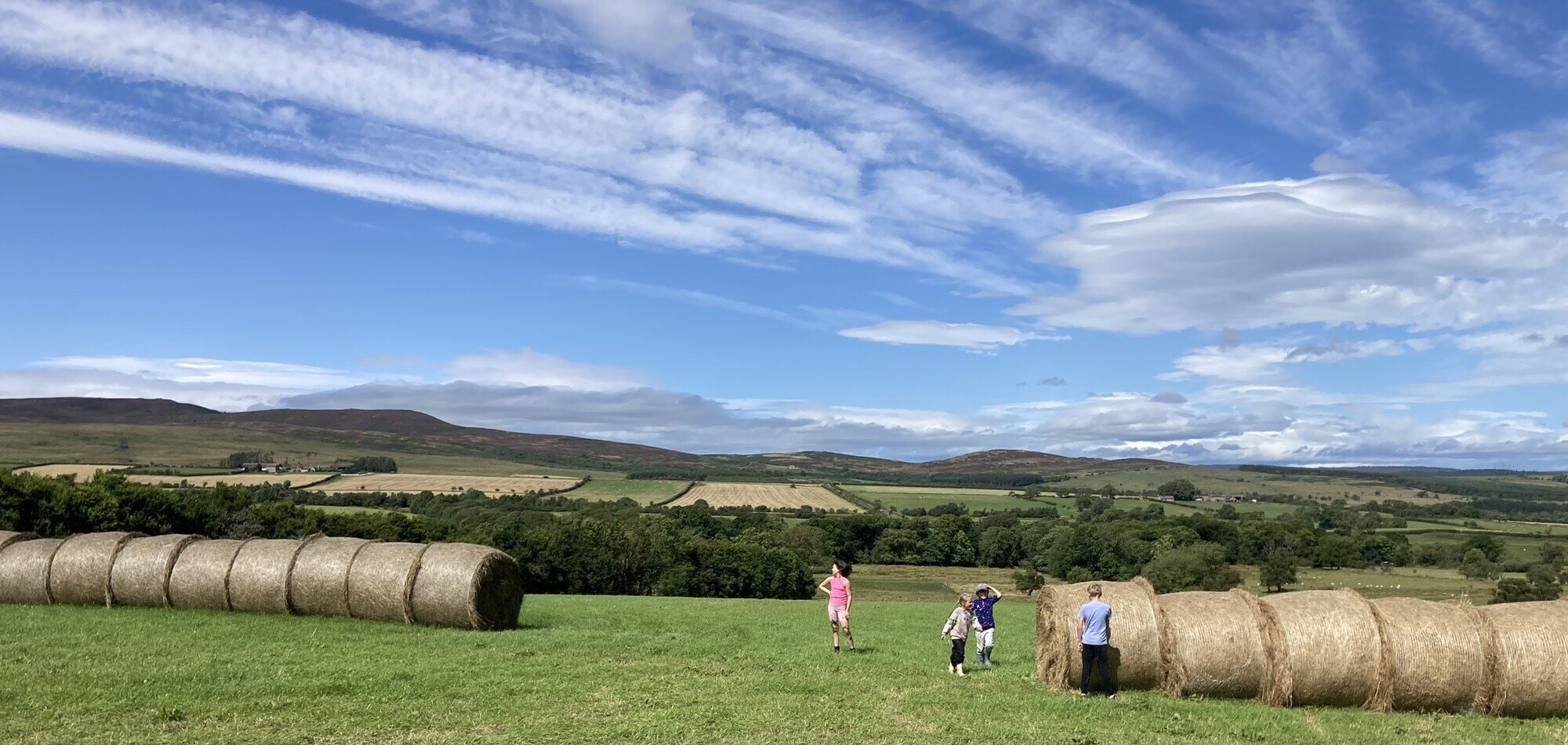
Solidarity Farm, based in rural Northumberland, partners with schools and organizations working with vulnerable children and young people, using farming practices and the natural environment to build social and emotional skills, confidence, and resilience.
On the farm, learning happens through doing. Surrounded by nature, children develop trust and social-emotional skills in a psychologically safe space where relationships are built over time. Responsibility becomes real: caring for animals, tending land, and contributing to shared tasks. These experiences lay the foundations for transformation, enabling many young people to re-engage with learning, make progress, or reintegrate into mainstream education.
Rather than focusing on what young people lack, Solidarity Farm centers on what they can contribute. In doing so, it reframes education as a relationship, responsibility, and belonging.
“Many young people struggling in conventional classroom settings come to believe they are troublemakers and begin to live up to that narrative. When we take them out onto the farm, bedding cows, caring for animals, or working on conservation projects, they begin to see their own value and the many different ways they can express themselves,’ says John.
What often surprises me is how schools question the behaviour change, when in reality, mainstream education can struggle to adapt once school has become a rigid and unsafe place. If we want better outcomes, we need systems that prioritize belonging, flexibility, and real-world responsibility, not exclusion. So that young people can reconnect with learning in ways that genuinely work for them.”
Learn more about John’s work here.
Thriving Futures: A long-term commitment to belonging and opportunity
What connects these diverse stories is a shared belief: young people are not problems to be managed, but potential to be invested in and nurtured. When children are given space to express themselves, build confidence, and experience belonging, they do more than cope — they grow. And when growth is supported early and consistently, trajectories change.
The ripple effects are profound. Confidence strengthens relationships. Belonging deepens engagement. Skills translate into education, employment, and leadership. Over time, these individual shifts compound into stronger families, schools, and communities.
If we are serious about tackling poverty, services like these must not be treated as optional extras or short-term interventions. They are essential infrastructure. Long-term investments in equity, prevention, and possibility; ensuring that disadvantage does not define a child’s future.
This piece is part of our Thriving Futures series, spotlighting UK Fellows who are breaking down educational disparities so that every child and young person can access the skills, role models, and opportunities they need to shape their own future. Learn more about other UK Acumen Fellows working to ensure no child our young person is left behind here.