Redefine Success
The stories we learn to tell ourselves
UK Acumen Fellow Charlie Chan on identity, leadership and going beneath the surface
October 2, 2026
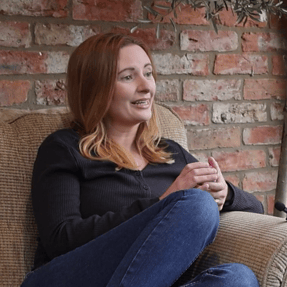
.jpg?width=287&height=288&name=Charlie%20Chan%20(2).jpg)
When Charlie began her Acumen Fellowship in 2025, as Director of Communities at United Communities, storytelling was a key skill she wanted to develop. She wanted to better articulate not only what she did, but why she did it, and to connect her work more clearly to the experiences that had shaped her.
A year later, Charlie returned to the same material from a new perspective, this time supporting members of the 2026 cohort as a mentor.
Through the Authentic Voice module, Fellowship participants learn how to draw on their personal values and lived experiences to tell stories that connect with others and inspire action, mobilizing people in ways that facts and data alone rarely can.
Charlie shares her Authentic Voice journey with us below.
What made finding your Authentic Voice feel like an important area of development for you?
When I first applied for the Fellowship, I remember one of the application questions asking where we felt our leadership gaps were. For me, a major area for development was storytelling and public speaking: being better able to articulate what I do and why I do it.
I knew that there were stories in there, but I had never gone beneath the surface of the words and labels I used to describe my identity. I was very comfortable staying at that surface level. I could say that I’m autistic, that I’ve been homeless, but I never went any deeper than that. Crucially, I was really aware that this was holding me back as a leader.
When I saw that one of the modules was Authentic Voice, it felt like a necessary challenge: uncomfortable and hard, yes, but something I knew I needed to tackle.
What did the Authentic Voice content unlock for you?
The framework we worked through was incredibly helpful. It broke storytelling down into the Story of Self, our journey as a leader; the Story of Us, our shared values and experiences; and the Story of Now, our call to act.
It wasn't until I worked through that framework that I was able to pinpoint the moment that led me to the work I do today and helped me understand why I do it. That realization was incredibly important.
The Authentic Voice work gave me the language to go deeper than those words and labels. Before that, I had thought of many of my experiences as things I shouldn’t talk about.
My assumption was that if people knew I live on a council estate, they would question my capabilities. And, if they knew I’m neurodivergent, would they see that as a barrier to my work?
I moved to the estate I live on now 12 years ago after becoming homeless, and I was terrified to move here because of its reputation. Instead, it became the most amazing community and the best place I’ve ever lived.
Now, in a full circle moment, I work with schools and institutions to help them engage with communities like mine and recognize the strengths and gifts already present rather than seeing only the deficit and stigma. Working through the Authentic Voice framework helped me recognize that experience as a turning point in how I approach my work.
How did that change the way you saw yourself as a leader?
Previously, I couldn’t articulate how my experience was a strength in my leadership. I moved from seeing it as a deficit and something I needed to hide, to feeling confident that I am the right person to be doing this work because I have lived these experiences.
That doesn't mean I understand the experiences of everyone the organization works with, but it does give me insight into just how powerful stories, narratives, and labels can be.
I’ve also learned the power of understanding your own “why” and being able to articulate it. It’s given me much more confidence in myself as a leader, including the confidence to challenge others, something that previously felt far outside my comfort zone.
 What did you start doing differently afterward, and what opportunities came from that?
I started to really pay attention to where single stories were being told about places and people. That deepened my commitment to amplifying stories about people and places that too often go untold.
Over the course of a year, I went from struggling to tell my own story to writing two articles for the Fairness Foundation. The first was based on my Authentic Voice story I developed during the Fellowship. That led to an invitation to write a second piece exploring the personal impact of policy.
Previously, I would have avoided writing about parts of my life, such as becoming a mum as a teenager. Now, I recognize that experience as another part of my identity that adds strength and depth to what I have to say. Both articles challenged the idea that any person or place can be understood through a single story.
I also wouldn’t have had the confidence to speak on a podcast before or to be filmed. Now, I’m having a speaker profile developed, exploring opportunities to speak at events, and embracing new ways to share my story.
Full circle: Returning as a mentor
What was it like to support another Fellow through the same experience?
When I was invited to be a mentor for this module it was quite surreal, given that I had identified storytelling as my biggest leadership gap. I jumped at the opportunity because I know how much of a difference the module made for me, and I wanted to help others move through the same process.
I absolutely loved it. I loved mentoring three cohort members and seeing how their stories evolved over that period. It was so rewarding to see them find their stories and begin to dig a little deeper. It was a privilege. The experience also gave me greater confidence that this is a skill I have and something meaningful I can contribute.
What did you notice about yourself through the process of mentoring the three cohort members?
Having gone through the process myself showed me the value of supporting others through something you have experienced firsthand.I knew what I had found difficult, and I could see where other people were encountering similar challenges.
I could tell them to trust the process, and reassure them that what they were experiencing was normal. I could remind them that they didn’t need to have a beautifully packaged story ready to go.
This isn’t simply about writing a story. You’re going deep down into your own experiences, identity, and values, and that shouldn't be rushed. Being able to give people that “permission” really helped.
If I had mentored the module without having experienced it myself, I think my support would have been very different and not nearly as strong.
One of Charlie’s mentees was Saboohi Bukhari. Saboohi joined the 2026 Fellowship as Director of Place-Based Giving at London Funders, where she is leading the next chapter of London’s Giving and working to build a UK-wide movement of place-based change.
Hear Saboohi's story
For 2026 UK Fellow Saboohi, Authentic Voice became more than a framework. It gave her a new way to reflect on her experiences, her leadership, and the work she does. So what did Authentic Voice unlock for Saboohi, and how is she applying it in her work?
Listen to Saboohi share her experience below.
.png)