Redefine Success
Building Value Beyond Waste: How Angel Imdad Built IRVERDE
How a researcher became a builder, and learned that scale is a test of leadership.
July 2026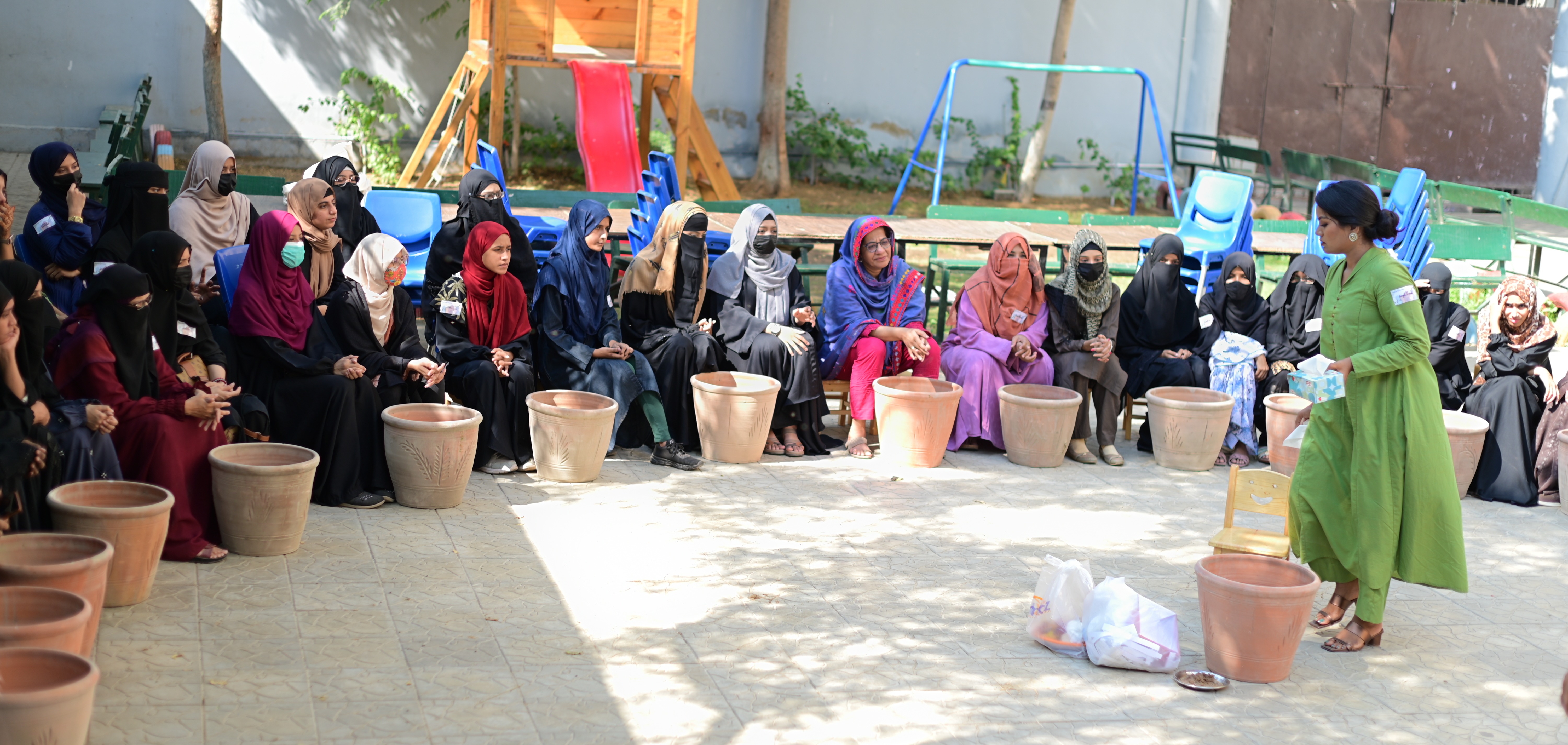
A young researcher walks into a government environment office in Sindh, expecting to study a problem on paper. Instead, she meets two women. Both handle medical waste for a living, with little more than their bare hands to protect them. Both have been pricked by used needles pulled from hospital bins that should never have reached them. One is now living with HIV. The other, with hepatitis.
Angel Imdad never forgot them.
"That experience stayed with me," she says. "Until that point, waste had been an environmental concern. Meeting those women made it personal. I realized that behind every improperly managed waste stream was a human being carrying the consequences."
It was the moment a problem became a calling. The waste wasn't only an environmental failure. It was an economic one, and a profoundly human one; the people carrying the greatest risks were the least visible of all. If the consequences were this stark, Angel kept asking, why was the system doing so little about them?
She decided to build the answer herself.
From a balcony to a value chain
The beginning was unglamorous. In 2019, Angel and her co-founder, Naushad, collected waste from a handful of restaurants in a personal car and sorted it by hand on the balcony of Angel's apartment, wearing basic protective gear. They onboarded eight restaurants. And then the pandemic stopped everything.
The pandemic halted operations. But it did not change the problem they had set out to solve. In 2022, IRVERDE restarted with a sharper focus on scale, and what had begun on a balcony became a model that now spans the waste value chain.
Today, IRVERDE collects directly from institutions and manages sensitive streams like hospital waste that demand specialized handling. Rather than displacing the informal collectors who segregate most of the country's recyclables, it buys from them, building more reliable market access and fairer pricing into the system instead of around it. Recovered materials are sold on for recycling or upcycled into products, from bags and furniture to corporate gifts. Layered on top is a sustainability practice — ESG audits, carbon assessments, ISO certifications — that companies like Mondelez Pakistan and Engro now rely on.
IRVERDE’s impact
- 900,000kg of waste recycled to date
- 1.67Mkg CO₂e emissions avoided
- 26,000+ lives impacted
The model works. WWF, GIZ, Standard Chartered, Bank Alfalah, and the German and US Consulates have all partnered with IRVERDE — a vote of confidence in a young company's ability to deliver real environmental and social returns. By every measure that matters at this stage, Angel has built something that works.
Which is exactly when the harder questions begin.
Reclaiming "Kachra Rani"
Building in the waste sector meant confronting more than logistics. It meant confronting how a society sees the people who do the work and, at first, how it saw her.
Early on, people called her Kachra Rani. The Garbage Queen.
That reframe became a thesis. Improving waste systems, Angel understood, was inseparable from changing who gets valued within them. So IRVERDE built that conviction into its operations. Its livelihood programs have trained more than 600 women in upcycling, composting, and sustainable waste practices, opening pathways to income from waste-based enterprise. It also works with schools to educate young people about waste, sustainability, and environmental responsibility, building awareness among the next generation of consumers and citizens. To date, these efforts have reached more than 6,000 students through animated learning content and hands-on activities designed to build awareness from an early age.
Within IRVERDE, Angel emphasizes equal pay and a culture where employees feel comfortable reporting mistakes. In a service-driven business, she believes accountability begins with creating an environment where problems can be surfaced rather than hidden.
The part no one warns you about
Like most founders building something real, Angel has had moments when the whole thing felt like it might not survive. The pandemic was one. Cash flow is another constant pressure in a sector where payment cycles stretch 60 to 90 days and weak enforcement quietly rewards the informal networks that cut corners.
"There have been times when I considered shutting everything down," she says. "But in those moments, I remind myself why I started. This work was never just about waste. It was about solving a larger social and environmental problem, and creating opportunities for communities that are often overlooked."
Those moments taught her something that no operational playbook could. Ask her what she has learned about leadership, and she doesn't talk about strategy or scale curves.
It is a quietly radical definition, and a familiar one to anyone who has tried to grow an organization without losing the reason it exists. The recognition has followed: the Prime Minister's Innovation Award, the Standard Chartered Women in Tech Grant, the She Loves Tech Award, and study from Australia to Germany. But the questions that occupy Angel now are not about awards. They are about what comes next.
The questions that come with scale
As IRVERDE enters its next phase, the challenges have changed shape. They are less about how to collect waste and more about how to lead. How do you scale impact without losing sight of the communities the work is meant to serve? How do you build systems that keep creating value long after the founder steps back?
These are not questions a founder answers alone. In 2025, Angel joined the Acumen Pakistan Fellowship, not to learn how to run her organization, but to think through exactly these questions alongside other leaders wrestling with versions of the same thing: how to grow without drifting from your purpose, and how to keep the people at the center of the work visible as the work gets bigger.
That, in the end, is the measure she holds herself to. Not tonnage or revenue, but visibility — whether the people, opportunities, and costs hidden inside Pakistan's waste economy finally become something the country can see and value.
"For me, success is defined by how many people we can enable and empower through our work," she says.
It is, in many ways, the same idea that first drew her in. Years ago, two women living with the consequences of a broken system changed the course of Angel's work. Today, through IRVERDE, she is building toward a future where environmental responsibility is measurable, waste workers are valued, and opportunity can be made from what a society once saw only as garbage.
For builders like Angel
You've built something that works. The Pakistan Acumen Fellowship is for what comes next.
If you're leading a solution to poverty that's already making a difference — and you're ready to grow it alongside a community of Pakistan's most ambitious builders — applications for the 2026 cohort are open until 14 August. Learn more here.
.jpg)
.png)